Home Health Coding: Guidelines, Jobs, Certification, Salary, and Career Scope
The home health industry is undergoing rapid changes. As more care shifts directly into patients' homes, agencies face strict regulatory standards, complex clinical documentation, and evolving payment models. At the center of this complex environment is medical coding. Accurate coding ensures that home health agencies receive proper reimbursement, maintain compliance with federal guidelines, and deliver high-quality patient care.
Whether you are an agency administrator looking to streamline your revenue cycle management or an aspiring medical professional exploring career paths, understanding the ins and outs of home health coding is essential. This comprehensive guide breaks down everything you need to know about this highly specialized field, covering its rules, workflows, salary expectations, and future industry trends.
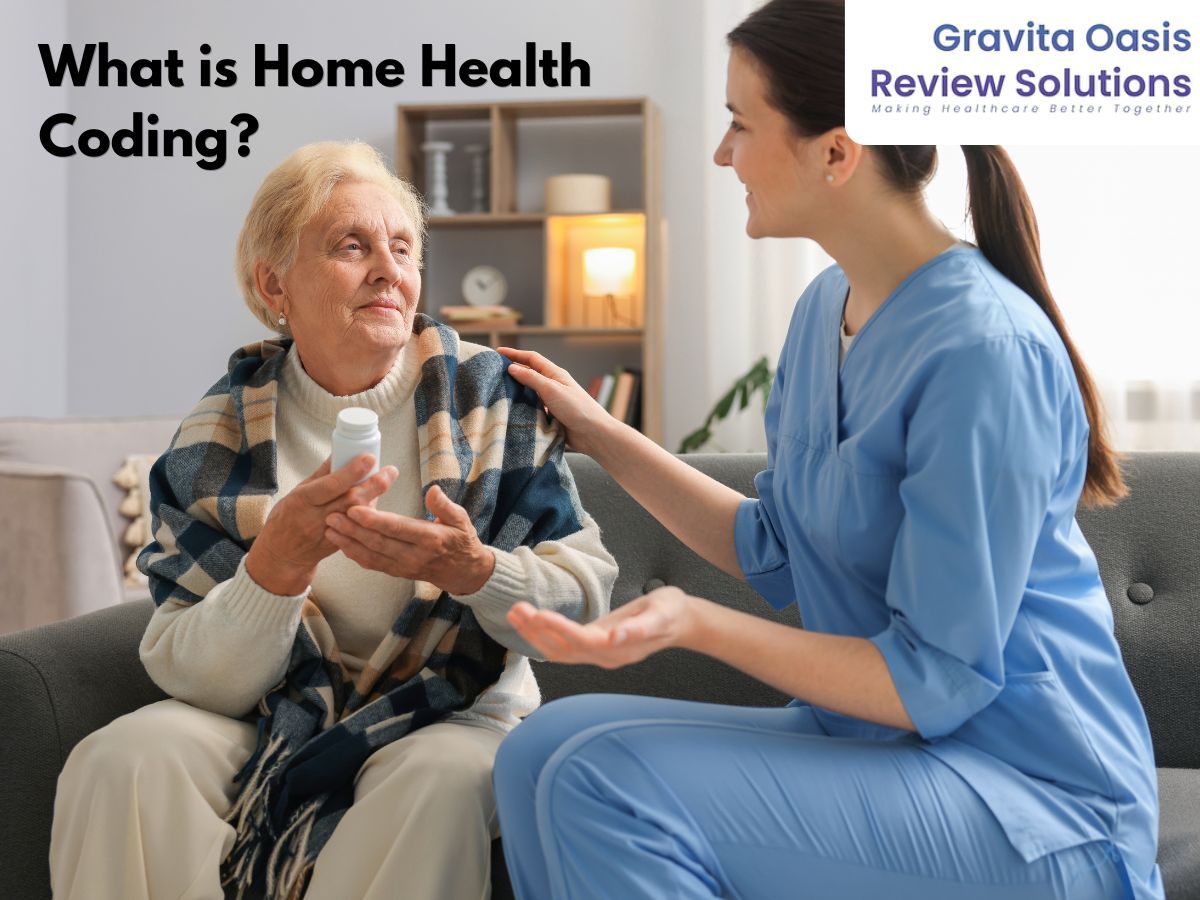
What Is Home Health Coding?
Home health coding is the specialized process of translating a patient's medical diagnoses, clinical treatments, and medical supplies into standardized alphanumeric code sets-specifically ICD-10-CM, HCPCS, and CPT codes-for home-based healthcare services. This data is paired with the Outcome and Assessment Information Set (OASIS) to determine clinical severity, establish medical necessity, and secure accurate reimbursement from Medicare, Medicaid, and private insurance companies under the Patient-Driven Groupings Model (PDGM).
To understand what is home health coding, it is important to look at the specific code sets used in this field:
- ICD-10-CM (International Classification of Diseases, Tenth Revision, Clinical Modification): These diagnosis codes represent the patient's specific medical conditions, chronic illnesses, or injuries. They form the foundation of the billing claim by establishing the medical necessity of the home care services.
- HCPCS (Healthcare Common Procedure Coding System): These codes describe the specific treatments, equipment, or services delivered to the patient. For example, they are used to track durable medical equipment (DME) like wheelchairs, walkers, and oxygen concentrators.
- CPT (Current Procedural Terminology): While primarily used in outpatient or hospital settings, CPT codes are relevant in home health for specific therapies, diagnostic tests, or specialized nursing injections.
- Revenue Codes: These three-digit numbers are utilized alongside HCPCS codes to group services into specific cost centers for billing purposes, such as skilled nursing or physical therapy.
Unlike hospital coding, home health coding does not occur in a vacuum. It is deeply connected to the OASIS assessment, a comprehensive tool that tracks a patient's functional status, cognitive abilities, and overall health status. Together, these elements determine an agency's operational data and financial reimbursement.
Why Is Home Health Coding Important?
Understanding what is home health coding also means understanding its massive financial and clinical impact. Under Medicare's Patient-Driven Groupings Model (PDGM), reimbursement relies heavily on the specific diagnoses entered onto the claim form. If an agency uses incorrect or non-specific codes, the claim can be downcoded or denied entirely, impacting cash flow.
Accurate home care coding guarantees that agencies are reimbursed accurately and on time by Medicare, Medicaid, and private insurance companies. Misalignment between HCPCS, Revenue, and ICD-10 codes can quickly lead to claim denials or incorrect payments. This carries substantial financial risks, including underpayment, overpayment penalties, and legal liability during post-payment reviews.
Beyond finances, proper coding is critical for clinical compliance and quality tracking. The Centers for Medicare & Medicaid Services (CMS) uses coding data to measure patient outcomes and evaluate agency performance. Accurate coding ensures that the patient's clinical picture is fully represented, which protects the agency during regulatory audits and supports quality reporting initiatives.
Why Will Home Health Coding Increase in 2026
The demand for specialized home health medical coding is expanding faster than ever. As we move through 2026, several key factors are driving this rapid growth:
1. An Aging Population and Shifting Preferences
The baby boomer generation continues to age, vastly increasing the number of Medicare beneficiaries who live with multiple chronic conditions. Additionally, most seniors prefer to receive care in the comfort of their homes rather than moving into long-term care facilities. This shift has led to a major increase in home health admissions nationwide.
2. Expansion of Home Health Value-Based Purchasing (HHVBP)
CMS has expanded the Home Health Value-Based Purchasing model across the country. Under HHVBP, reimbursement is tied directly to quality of care and patient outcomes rather than just the volume of services provided. Because coding and OASIS data directly impact an agency's quality scores, precise coding is no longer optional-it directly influences future Medicare payment adjustments.
3. Stricter Regulatory Audits and the Review Choice Demonstration (RCD)
Medicare has increased its compliance oversight to eliminate fraud and administrative errors. The Review Choice Demonstration (RCD)-currently active in states like Illinois, Texas, Florida, Ohio, and North Carolina-requires agencies to submit claims for pre-claim review or undergo 100% post-payment reviews. Expert coding is essential to ensure pre-claim affirmations and avoid costly payment hold-ups.
How Coding for Home Health Services Works
The lifecycle of coding for home health services follows a structured, chronological 5-step breakdown throughout the patient care documentation process:
[Step 1: Initial Assessment & OASIS] ? [Step 2: Care Plan Development] ? [Step 3: Documenting Services] ? [Step 4: Monitoring & Reassessment] ? [Step 5: Discharge & Final Review]
Step 1: Initial Assessment and Diagnosis
When a patient is admitted, a clinician (such as a registered nurse or physical therapist) conducts a comprehensive in-home evaluation. They use the mandatory OASIS tool to gather health data and note the primary and secondary diagnoses that require care.
Step 2: Developing the Care Plan
A personalized care plan is created to address the patient's specific needs. This plan outlines the disciplines required (such as skilled nursing, physical therapy, or occupational therapy) and assigns the correct CPT and HCPCS codes to represent these planned services.
Step 3: Documenting Services Rendered
As professionals provide care in the home, they document every visit and intervention. They utilize the appropriate HCPCS or CPT codes alongside correct Revenue codes to ensure accurate tracking and billing.
Step 4: Ongoing Monitoring and Reassessments
The patient's health status can change frequently. The OASIS tool is used continuously at specific time points (such as a recertification or a significant change in condition) to reassess functional and health status, ensuring codes are updated to match the patient's current reality.
Step 5: Final Outcome and Discharge
When services are no longer required or the goals are met, a final assessment is conducted using OASIS data. Final codes are assigned to document changes in health status, completing the billing cycle for that episode of care.
Key Responsibilities of a Home Health Coder
A professional home health coder plays a critical role in an agency's daily operations. They bridge the gap between clinical care and the billing department. Key responsibilities include:
- Reviewing Clinical Documentation: Analyzing physician referral notes, clinical narratives, therapy evaluations, and OASIS forms to understand the patient's complete health status.
- Assigning Precise Diagnosis Codes: Selecting and sequencing the appropriate ICD-10-CM codes, ensuring the primary diagnosis reflects the chief reason for home health care.
- Validating OASIS Responses: Cross-checking the clinician's OASIS responses against the clinical narrative to identify discrepancies that could affect the clinical grouping or quality metrics.
- Managing the Query Process: Clarifying incomplete or ambiguous clinical documentation by sending formal queries to physicians or home health clinicians.
- Applying Modifiers and Revenue Codes: Appending necessary billing modifiers and matching service lines with the correct revenue codes to ensure clean claim submission.
Skills Needed for Home Health Coders
To be successful in home health medical coding, professionals must develop a specialized mix of technical and analytical skills:
- Mastery of ICD-10-CM Guidelines: Coders must understand complex sequencing rules, manifestation codes, and the importance of coding to the highest level of specificity.
- Deep Understanding of PDGM and OASIS: Knowledge of how diagnosis codes map into specific clinical groups under the Patient-Driven Groupings Model is essential.
- Clinical Knowledge: A strong understanding of anatomy, physiology, pharmacology, and medical terminology helps coders interpret clinical narratives accurately.
- Attention to Detail: The ability to catch minor discrepancies between a nurse's notes and a physician's referral orders to prevent billing errors.
- Proficiency with Home Health EMRs: Familiarity with industry-leading Electronic Medical Record systems-such as Homecare Homebase, WellSky, and MatrixCare-is highly beneficial for seamless workflows.
Home Health Coding Guidelines You Should Know
Following official home health coding guidelines is necessary to maintain regulatory compliance and ensure appropriate payment. Key standards established by CMS and the Cooperating Parties include:
Coding to the Highest Level of Specificity
Using vague, unspecified codes is a primary trigger for payer audits and claim denials. Coders must review the entire medical record to select codes that state the exact site, etiology, and manifestation of a disease.
Also Suggested This: CDI in Healthcare
Correct Primary Diagnosis Sequencing
The primary diagnosis code must represent the chief condition for which the patient is receiving home health services. If a patient is referred for wound care for a diabetic foot ulcer, the diabetes code with the ulcer manifestation must be sequenced before the specific ulcer site code.
Comorbidity Coding Under PDGM
PDGM recognizes that a patient's secondary diagnoses-known as comorbidities-affect the complexity and cost of care. Coders must capture all active secondary conditions to ensure the agency qualifies for a comorbidity payment adjustment (low or high), which accurately reflects the resource intensity of the care provided.
Home Health Coding Examples
To better understand what is home health coding in practice, let's look at common codes and scenarios utilized by home health agencies.
Common ICD-10-CM Diagnosis Codes
- I10: Essential (primary) hypertension
- E11.9: Type 2 diabetes mellitus without complications
- M17.11: Unilateral primary osteoarthritis, right knee
Common HCPCS Level II Codes
- G0299: Direct skilled nursing services of a registered nurse (RN) in the home health setting, each 15 minutes
- G0151: Services performed by a qualified physical therapist in the home health setting, each 15 minutes
- Q5001: Hospice or home health care provided in patient's home/place of residence
Common Revenue Codes
- 0023: Health Insurance Prospective Payment System (HIPPS) code (used to submit PDGM claims)
- 027X: Medical/Surgical Supplies
- 055X: Skilled Nursing Care
Practical Application Scenario
Imagine a patient is discharged from the hospital after a right total knee replacement due to severe osteoarthritis and is referred to home health for skilled nursing wound checks and physical therapy.
Code Type | Code Used | Description |
|---|---|---|
| Primary Diagnosis | Z47.1 | Aftercare following joint replacement surgery |
| Secondary Diagnosis | M17.11 | Unilateral primary osteoarthritis, right knee |
| Procedure / Discipline | G0151 | Physical therapy services in the home (15-min increments) |
| Revenue Code | 042X | Physical Therapy billing category |
Challenges in Home Health Medical Coding
Agencies face several ongoing challenges when managing their daily coding operations:
- Complex Comorbidities: Navigating the complexity of ICD-10-CM coding for elderly patients with multiple, evolving chronic health conditions that require frequent diagnosis updates.
- Physician-Agency Disconnect: Ensuring alignment between the referring physician's documented diagnosis and the home health agency's internal clinical assessment.
- Insufficient Documentation: Experiencing claim denials due to incomplete clinician notes, outdated HCPCS codes, or missing prior authorizations.
- Audit Risks: Triggering costly payer audits due to the excessive overuse of unspecified diagnosis codes or mismatched revenue codes.
- Strict Timing Windows: Receiving automatic claim denials or payment penalties as a result of late submissions past the required CMS deadlines.
How Gravita Oasis Review Supports Home Health Coding
To address these challenges, many agencies shift away from managing everything in-house. Partnering with a dedicated specialist like Gravita Oasis Review helps streamline operations and safeguard revenue.
Why Agencies Choose Gravita Oasis for Home Health Coding Support
Gravita Oasis Review provides specialized home care coding services designed to meet the needs of modern home health providers. By combining deep clinical expertise with up-to-date knowledge of CMS guidelines, Gravita Oasis Review functions as an extension of your operational team.
Seamless EMR Integration
Unlike rigid services, Gravita Oasis Review integrates directly into your existing Electronic Medical Record (EMR) workflows, working within major platforms like Homecare Homebase, WellSky, and MatrixCare. This eliminates manual data entry errors and ensures a smooth, secure workflow.
Rapid Turnaround Times and Reliable SLAs
In the home health sector, delayed coding means delayed billing and tight cash flow. Gravita Oasis Review delivers guaranteed 24-to-48-hour turnaround times (TAT), backed by strict Service Level Agreements (SLAs) maintaining a 95%+ coding accuracy rate.
In-House vs. Outsourced Cost Comparison
Maintaining an in-house coding team comes with significant hidden overhead, including benefits, paid time off, continuous training, and expensive software licensing fees.
Cost Factor | In-House Coding Team | Gravita Oasis Outsourced Services |
|---|---|---|
| Fixed Overhead | High (Salaries, Benefits, PTO) | None (Pay-per-chart or variable pricing) |
| Software & Training | Agency covers annual updates & CEUs | Included in the service model |
| Scalability | Difficult during staff shortages or peak times | Easily scales with your census changes |
| Audit Protection | Dependent on internal staff knowledge | Dual-layer review with certified experts |
By outsourcing to Gravita Oasis Review, agencies eliminate fixed staffing costs and transition to a scalable model where fees align directly with chart volume, boosting overall profitability.
Advanced Quality Assurance and Audit Readiness
Gravita Oasis Review utilizes an optimized review process combining clinician-focused workflows with human oversight to deliver compliance-ready coding. This approach helps manage billing complexities, allowing your clinical team to remain focused entirely on patient care. It also provides strong support for Medicare's Review Choice Demonstration (RCD), ensuring high pre-claim affirmation rates and reducing the risk of unexpected payer audits.
Key Takeaways
- Comprehensive Definition: Home health coding translates clinical home care data into standardized ICD-10-CM, HCPCS, and CPT codes, which are closely integrated with OASIS assessments.
- Financial Impact: Accurate coding directly dictates an agency's financial stability under the Patient-Driven Groupings Model (PDGM) and helps avoid claim denials.
- Market Growth: Demand for specialized coders is rising in 2026 due to an aging population, HHVBP expansion, and stricter RCD audit requirements.
- Workflow Integration: Successful coding follows a reliable 5-step lifecycle from the initial in-home assessment through to final discharge review.
- Outsourcing Benefits: Partnering with specialized providers like Gravita Oasis Review helps eliminate internal administrative burdens, ensures fast 24-to-48-hour turnaround times, and maintains compliance-ready audit tracking.
FAQs About Home Health Coding
What does a home health coder do?
A home health coder reviews a patient's medical records, clinical narratives, and OASIS assessments to assign precise ICD-10-CM diagnosis codes, HCPCS codes, and CPT procedure codes. They ensure that all documented services match regulatory standards for accurate billing and compliance.
Is home health coding a good career?
Yes, it is a highly stable and expanding career path. Driven by an aging population and the expansion of home-based medical care, the industry sees steady demand for specialized coders, projecting an 8% to 10% growth rate over the next decade.
Can you do medical coding from home?
Yes, you can. Many medical coders work entirely from home. If you are wondering, "can you do medical coding from home?" or looking into medical coding and billing from home, the home health sector offers numerous remote positions. Because modern health agencies utilize cloud-based EMR systems, certified coders can securely log in, review clinical documentation, and submit codes from a remote home office.
What certification is needed for home health coding?
While general coders often hold a Certified Professional Coder (CPC) credential, home health specialists benefit from targeted industry certifications. These include the Certified Home Health Coder (CHHC) or the Board Certified in Home Health Coding (BCHH-C) designation, which demonstrate mastery of OASIS and PDGM guidelines.
What are home care coding services?
Home care coding services are outsourced solutions provided by third-party billing and compliance experts. These services manage the entire coding and clinical review process for an agency, helping to process claims efficiently, reduce denials, and maintain audit readiness.
How do home health coding companies help agencies?
They help agencies by reducing administrative overhead, accelerating billing cycles, and improving coding accuracy. Expert partners provide quick turnaround times, managed denial protocols, and help protect the agency against costly Medicare compliance audits.
Is home health coding difficult?
It is considered one of the more complex specialties in medical coding. This difficulty stems from the need to understand both intricate ICD-10-CM sequencing rules and how those diagnoses interact directly with the clinical and functional questions on the OASIS assessment under the PDGM model.
What is the CPC exam salary?
Professionals who pass the CPC exam can expect competitive compensation depending on experience and location. In the United States, the average home health coding salary typically ranges between $45,000 and $75,000 per year, while international operations in regions like India generally see salary brackets ranging from ?2.5 to 8 LPA.
Conclusion
Home health coding is a vital link connecting clinical excellence with financial stability. As regulatory pressures grow and reimbursement models become more complex, keeping up with changing guidelines requires constant vigilance and specialized expertise.
Agencies must choose whether to invest heavy resources into recruiting, training, and maintaining an internal coding team, or to leverage the efficiency of a specialized partner. Working with an expert provider like Gravita Oasis Review allows home health agencies to minimize compliance risks, secure accurate reimbursements, and return their primary focus to where it matters most: delivering exceptional care to patients right in their homes.